
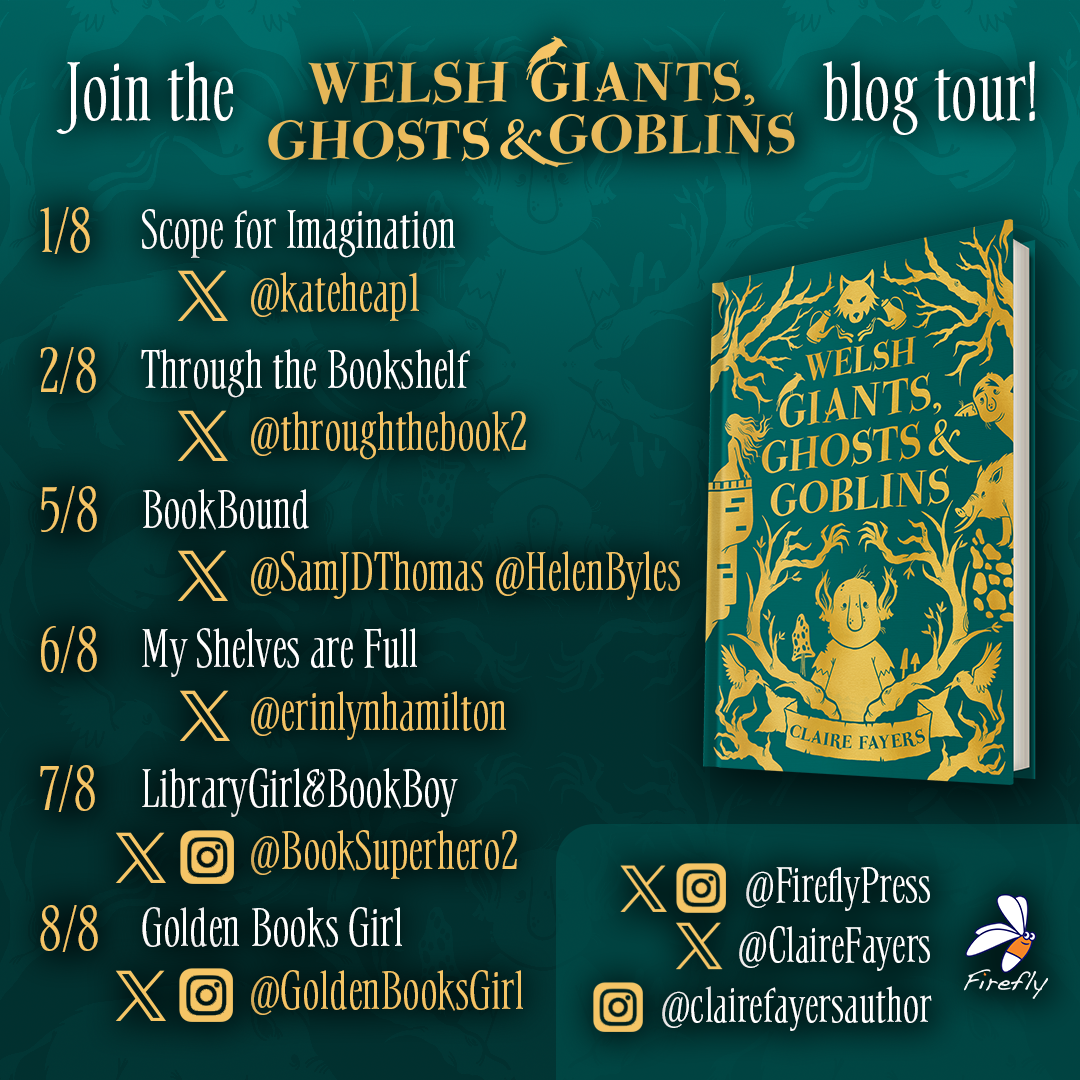
A beautiful hardback copy of Welsh Giants, Ghosts and Goblins arrived and I dove straight in. The guest blog from Claire Fayers, below, is ideal because I loved the stories featuring the goblins best. Their pesky personalities shone through and I quite liked their tricks and unique looks. The introduction at the beginning is key to these stories as some changes have been made, as Claire states, happens everything a story is shared.
Now I must plan a trip to Wales to see if I can spot any goblins!
There are many kinds of fairy folk in Wales, and fortunately, Wirt Sikes, nineteenth century author of British Goblins did half my work for me, classifying the various types. It’s a great read for anyone interested in folklore, by the way. I picked outmy favourite Welsh fairy folk from Wirt Sikes’s book and played with them. My versions are not exactly the same as his, but his ghost hasn’t come to haunt me in vengeance yet so I think I’m okay.
The Pwca
I’ve written about pwcaod before. In my Welsh Fairy Tales, Myths and Legends, a pwca was a friendly goblin who lived in mines and tapped on the walls to warn the human miners of danger.
In Welsh Giants, Ghosts and Goblins, we see a different side to these creatures. The pwca in this book is a furry shapeshifter called Cynon and he terrorises a whole townbefore he’s finally defeated.
The Bwbach
This is my favourite goblin. A bwbach is a house goblin, friendly and helpful, unless you annoy it, in which case you better look out. It appreciates a bowl of cream and a snack at night. Basically, a Bwbach is like a cat, except that your cat won’t do your ironing for you.
The Ellyll
Ellyllon are Welsh elves. According to Mr Sikes, they haunt the groves and valleys of Wales, they wear foxgloves on their hands and they’re especially fond of mushrooms. I don’t know about that, but they are also fond of music and dancing, and that’s the part I took in my retelling of the downfall of Pennard Castle on the South Wales coast.
The Coblynau
The word ‘coblyn’ is so similar to ‘goblin’ it has to come from the same root. A coblyn is a miner, tough and no-nonsense.They live underground and generally avoid humans – unless one of their tunnels accidentally comes up into your back garden.
The Tylwyth Teg
I bet you were wondering when I’d get to the most famous Welsh fairies – the Tylwyth Teg, or Fair Folk. If you ever fall foul of fairy folk, nine times out of ten it’ll be the Tylwyth Teg. They are experts in illusion and enchantment, sometimes helping their human neighbours if it suits them – but, as always, if a fairy offers to help you, think very carefully before you accept. I based my story ‘A Game of Goblins’ on various tales in which the fair folk give gifts to people, and those gifts are never as straightforward as they seem.

 My Shelves Are Full